Executive Council Thoughts, October 2013

The Episcopal Church’s Executive Council just finished its meeting in Chicago.  We meet three times a year, and the meetings are generally gracious, prayerful, and carefully deliberative.  This one was no exception.  I am grateful to serve alongside such wise and dedicated servants as my fellow Council members.

This meeting opened with some anxiety, and I think some anticipation of fireworks to come.  Happily, fireworks did not go off in my presence.  However, the Council addressed some important issues.

The Conflict over the United Thank Offering.  Without going into the details of the current UTO controversy, I can say how Council addressed it.  I think that some people were looking for Council to sail in and resolve the issue at this meeting.  With deep conflicts, however, a quick fix is often a mistake, resulting in a mere band-aid that doesn’t treat the underlying injury.  The issue was taken up by the Governance and Administration for Mission committee, which properly addresses questions of by-laws and governance.  In executive session, GAM heard what I understand to be very frank and sometimes emotional explanations of how different people experienced the conflict.  I don’t serve on GAM, so I don’t know the substance of those conversations.  In plenary session, the full Council approved a resolution (see the news story here), and heard that GAM and the UTO each plan to appoint four members to a working group that will spend significant time addressing the issues and the decisions that need to be made.  This has now become a matter for Executive Council rather than staff, as I hoped it would.  It will appropriately go through Council’s normal channels: in-depth research by a committee, followed by a report and recommendation to the full Council.  I expect we will hear that report in February.  I appreciate the calm leadership of Steve Hutchinson, the chair of GAM, and I trust this group to address the conflict carefully and with appreciation for the ministry of the UTO and the historical leadership of Episcopal Church women in its decisions.

Please note, regarding the UTO:  100% of money collected goes to grants, and this will not change.  UTO administrative costs are paid out of dedicated trust funds managed by the Church Center.  You don’t have to withhold your contributions to UTO out of fear they will end up in the wrong hands, or be used for the wrong purposes – this will not happen.  And speaking as a member of Council, we have no interest in interfering with UTO grant priorities.  If it turns out that some sort of legal rule requires that Council approve grants, I can promise you that it will be a rubber stamp, as it is with a number of other grants that Council approves.

Location of the Church Center.  In 2012, General Convention passed resolution D016 to move the Church Center away from 815 2nd Ave. in Manhattan.  In February 2013, the Executive Oversight Group of the Church Center issued a report recommending that the Church Center NOT move.  This recommendation caused significant controversy, and led to Council creating a joint subcommittee of GAM and Finances for Mission (FFM).  I serve on that subcommittee (and on FFM).  Up until this meeting, I was concerned about the pace of the subcommittee’s work, but after this meeting, I am convinced that work is proceeding and the right investigations are happening.  We are exploring two issues: (1) what kind of Church Center (if any) does the church need? and (2) what is the best and highest use of the real estate we own in Manhattan?  I can’t say very much about what we are discussing, due to the sensitivities of talking publicly about real estate plans.  But I can say that we have retained outside experts to advise us, and are working on both questions.  Very soon, we will be issuing a survey so church members can weigh in on what kind of Church Center we would like to have.  Be patient, because this is a complex question – but I can promise you that D016 is being taken seriously.

The Budget Process.  I am the chair of the new budget process, by which we will come up with a budget to propose to the 2015 General Convention.  Program, Budget & Finance is working closely with us on this process.  Our goal in creating a new budget process has been to avoid the total fiasco that erupted with last triennium’s Executive Council budget, which was created by a small cadre of inner-circle leaders, with last-minute input from the rest of Council in plenary, and some significant mathematical errors by staff.  We don’t want those problems!  Our goal is to get wide and visionary input from ministry leaders (not just staff or Council) about what the church should be doing.  So far, we have reached out to ministry leaders in Committees, Commissions, Agencies, and Boards (CCABs) and other groups for their priorities, hopes and dreams for their areas of ministry.  We are currently working with Council standing committees to assess the input we have received and to set priorities among all the proposals named.

A couple of notes about what we have experienced so far:

> More than a few CCABs are not functioning very well this triennium.  I think this may be because of the lack of money for face-to-face meetings, along with a lot of turnover in some CCABs.  Whether this makes a difference to the 2015 General Convention remains to be seen.  I’m guessing we don’t need as many CCABs as we have, anyway.

> Some responses indicate that it is too early in the triennium to know what kind of budget needs ministries will have.  Our system expects budgets to be decided at the last minute by major advocacy efforts.  As Bishop Mark Hollingsworth (the chair of FFM) says, “we need to re-train our system.” Can we train ourselves to think with more vision, and longer-term?  I hope so – budget fiascos at Convention get a little wearisome.

> There’s a lot of work ahead of us to put together a visionary, coherent budget!

More Money to Spend!  Due to better-than-expected collections from dioceses, TEC will have more revenue this triennium than budgeted, to the tune of about $1.5 million.  Church Center leaders and the leaders of the Advocacy & Networking committee of Executive Council (A&N) came in with a proposal to hire a new racial reconciliation officer.  After in-depth and difficult discussion in both FFM and plenary session (see the news story here), the Council decided to approve the new officer.  This brings up some issues that I believe Council and FFM need to address before our February meeting.

> No one doubts that the racial reconciliation officer will do worthy and important work.

> However, it is troubling from a process perspective to have one priority funded immediately when others were proposed and not funded (at least not right away), including:

>> A heartfelt plea to restore Anglican Communion funding to 2012 levels, due to greatly improved relations in the Communion, from World Mission, Presiding Bishop Katharine, and Canon Chuck Robertson (Canon to the Presiding Bishop who leads our diplomatic relations with the Communion, and whose excellent work is greatly responsible for our improved relations), even though funding was cut at General Convention.  This decision was deferred to February because FFM wished to consult with PB&F about the action they took to cut the funding at the last Convention.  However, we advanced 2015 funds into 2014 so that the 2014 allocation will be as high as if we had made this decision.

>> Long-delayed and very important work on digitizing the Archives – decision deferred to a later date.

>> Support for Navajoland, which we believe will be necessary in 2014 – they will run out of money by June.  What are we going to do to support them?

> Many other priorities that might have been proposed if their advocates had known that money was available.  Church Center leadership knew about the money, and proposed their highest priority.  Would Council’s decision have been the same if we had been presented with a list of priorities and asked to choose among them?

> Joseph Farrell of North Carolina made the very good point that in his state legislative work, they follow the principle that a one-time increase in funding should not be used to fund a need that will continue (such as a staff position, which obligates us into the next triennium).  Careful stewardship means making judicious decisions that consider such points.

> John Floberg of North Dakota, who serves a Native American population, noted that when racial tensions arose in his area last year, the local churches organized and acted on their own, without the need for a church-wide officer to do it for them.  This brings up the whole question of subsidiarity.  Do we really need more church-wide officers at a time when we are trying to empower more ministry at the local, rather than the church-wide, level?

> There were a number of priorities passed by the last two General Conventions that were not funded.  Instead, we have funded a new position that was not proposed at the last Convention and does not have legislative support.  (BTW, this is not the same position as the anti-racism officer that was cut in 2009 – this position has a completely different job description.)  Should we have gone back to unfunded legislative priorities first, before coming up with new initiatives?  I think particularly of an area I am interested in, Latino/Hispanic ministries.  In 2009, we passed a Strategic Plan for Latino/Hispanic ministries, with great enthusiasm, and it was partly funded.  In 2012, we forgot about it altogether, instead funding Mission Enterprise Zones, but abandoning strategic initiatives that were planned such as marketing to Latinos and raising up and training Latino lay and ordained leaders.  Our attention span is so short that we swing from one priority to another without thinking broadly about our overall strategy as a church.

I believe that FFM needs to come up with a plan (before the February meeting) about how future excess funds are to be allocated.  This should involve consulting with PB&F about unfunded initiatives from the last two Conventions (and, I believe, giving them priority over new initiatives), and some sort of process to open up invitations for funding requests to a wider constituency than knew about this opportunity.

I do support the new racial reconciliation officer, and I’m sure she/he will do excellent work.  I just hope that we can change our approach as a governing board to think about how we use our resources in a more encompassing and strategic way.
Moses, Eldad, Medad, and the Office of Presiding Bishop


BSBR150201900
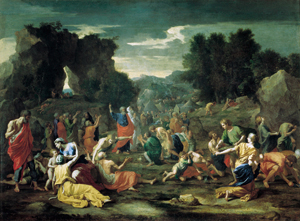
In Numbers 11:16-30, the Israelites are facing a big problem.  Lots of logistical issues are facing them – wandering in the desert, tiresome manna to eat all day, meat coming out of their nostrils, that sort of thing – and it turns out that the solution to their problems is not better logistics, but better leadership.  Moses finds that he can’t do the job alone, so God pours out the spirit on 70 elders to share the burden of leadership.  Because one leader – Moses – is willing to empower others, the gifts of the community multiply.  Moses is even willing to empower the leadership that springs up on the margins, as Eldad and Medad begin their unauthorized prophesying, and Moses affirms their ministry.

Leadership in the church works this way.  A transformative, visionary leader gathers together other leaders and empowers them for mission, delegating and sharing with them the task of leadership.  As all are empowered with the Spirit, the Body of Christ grows healthier and stronger.

I think real transformation happens with real leadership.  And because I believe this, I can’t agree with the Crusty Old Dean’s suggestion that we elect a caretaker/interim PB at the next Convention.  His argument is that we can’t elect a PB until we have defined the job.  But I think that in order to change, we should elect a transformational leader, who shares the church’s vision and passion for change, and who has the ability to gather others around that vision.

Certainly I understand that we are not a single-leader church – that The Episcopal Church is governed by a balance of people in various roles and various orders of ministry.  I appreciate and participate in our democratically elected governance structures.  And yet – I think that sometimes it takes a leader who is committed to change to empower all the many people who have to be on board to create real transformation. The whole group can create the vision, but it takes a leader to bring the vision to life, in all the many smaller groups that meet and carry out the work of the church.  Otherwise the system works to maintain the same balance that it has always known, staying comfortable in familiar structures.  Rabbi Edwin Friedman called this dynamic “homeostasis.”  I worry that without a leader who is committed to leading the church through change, our passion for transformation will founder, and whatever changes the 2015 General Convention makes to our structure won’t have any effect against the powerful forces preventing real change.

I believe that it is perfectly possible for us to elect a real agent of transformation as our next leader, and that that leader will be able to inspire change that our current structures will find very difficult to imagine.  We need the kind of change that even the Task Force for Reimagining The Episcopal Church (TREC), with its mandate to consider new ways of doing things, will find it hard to convince the rest of the church to risk.  That is why I hope the next Presiding Bishop will turn his/her attention from the issues that were most pressing in the current triennium (relations with the Anglican Communion and our own breakaway groups), to the issue that will be most pressing in the next (transformation for mission within the church).

In our church, the clear leader is the Presiding Bishop.  Yet, as Crusty Old Dean points out, we do need to redefine the office of PB.  The current office has evolved to the point that one person can’t possibly be gifted at all the areas covered.  The office as it currently exists comprises three broad areas:

05episcopal.600> Presiding officer of the House of Bishops.  This was the original office.  As presiding officer, the PB has big responsibilities in governance, including General Convention, Executive Council, and so forth, and also properly handles responsibilities such as pastoral development of bishops and bishop disciplinary matters.  If this were all that the job encompassed, the PB (1) could be thought of as an equivalent office to the PHoD, and (2) probably could continue as a diocesan bishop as well.  But that’s not all, because we have added …

Schori,Williams,others> Primate.  The PB is the spokesperson for the church to the world, including representing us in the councils of the Anglican Communion and ecumenical affairs, advocating for justice issues, speaking for the church in times of national crisis, etc.  This function was not contemplated in the original job description of the PB, but we need this kind of public leader.  If we didn’t have one, we would invent one. I don’t see how a diocesan bishop can function in these two necessary roles, with all the travel involved, which is why I don’t think the PB should remain as a diocesan bishop.  And this Primate function is why the PHoD will never be an equivalent office to the PB, because a non-bishop will never be seen as a Primate.

Effectively, the two roles above are enough for any human to handle.  And yet, we have added …

Episcopal-Church-picks-new-presiding-bishop-52-year-old-is-first-woman-to-lead-U-S-denomination> CEO and Head of Staff.  The original office of PB certainly never contemplated that the PB would have a staff, other than perhaps an administrative assistant.  But the churchwide staff has grown to the point that it would be impossible for a PB to do her other two roles and keep track of the staff as well.  Therefore, staff oversight is mostly delegated to a Chief Operating Officer who functions, effectively, as the CEO, and is accountable only to the PB.

Let’s pause there and think about that. What corporate board does not have the ability to oversee the work of the CEO or COO?  How is this a healthy situation, for the General Convention and its elected interim representative, Executive Council, to have the power to fund a staff, but little power to hold the staff accountable?  For the House of Deputies, one whole house of General Convention, to have no oversight over staff priorities because the staff is accountable to the Presiding Bishop and his/her appointed officers?  (Please do not read this question as a criticism of the current CEO, COO, and staff, or anything they have done, but rather of the strange way these roles have evolved.)

This is why I think the Crusty Old Dean’s suggestion of having an elected COO, from any order of ministry, has real merit.  General Convention has defined the need for a churchwide staff, and funds the positions.  Let Convention, or its interim representative, Executive Council, which is the church’s Board of Directors, select a CEO/COO/Head of Staff who is separate from the PB. Let that office be accountable ultimately to General Convention, and in practice, to Executive Council.

Selection of the Presiding Bishop.  The nomination process for the PB is budgeted to cost $226,000 this triennium.  Incredible!  As a member of the Finances for Mission committee of Executive Council, I can say we were all astounded and troubled by this figure, but we couldn’t see how the JNCEPB could do the work it was given by canon for less.  So – let’s change the canons.  My friend Del Glover, a former member of Executive Council, proposed to me by private email that we elect the PB by considering every bishop who is young enough to serve the full term a nominee; and then having both houses of Convention vote (by orders) until the same candidate is elected by both houses.

Get that?  All three orders of ministry would be voting on the Presiding Bishop, just the same way that in a diocesan election, both the lay and clergy orders get to vote until both orders have agreed.  The person elected by all three orders would truly be a Primate for the whole church, and not just a representative of the bishops.  This is appropriate because our PB is not just the presiding officer of one house of Convention; she/he is the Primate for the whole church.

In our current system, the lay and clergy role in selecting the PB is expressed in the nominations process, and in the HOD’s rubber-stamp ratification of the HOB’s choice.  Couldn’t we accomplish the election more appropriately, and more simply, by letting all three orders vote?

So I like Del’s proposal, in the sense that it saves a big nominating expense, while still honoring what the JNCEPB accomplishes (lay and clergy voice in the PB election).  I would refine it as follows:

> Consider every bishop who is young enough to serve the full term (and who doesn’t refuse to stand as a candidate) a nominee, and then honor the HOB’s role in selecting its own presiding officer by allowing it to vote as many times as necessary to narrow the field of candidates down to three.  This allows the House of Bishops, whose members know each other quite well, to serve as the nominating committee.  Then ….

> Submit those three candidates to both houses for a vote, until the same candidate is elected by all three orders.

Note that it would not make sense for a similar two-house vote to occur for the PHoD, because the PHoD is only the presiding officer of the HOD, and not a Primate who speaks for the whole church and represents the church to the world.

Some things haven’t changed that much since the time of Moses.  Leadership is still a key to transformation.  I pray that visionary leadership in the years to come helps to usher the church into a new era of mission to our world.

Acts 8 Missionary Gathering: I Dream of a Church

The Episcopal Church is in an Acts 8 Moment.  What’s an Acts 8 Moment?  Here’s one take on it:

And here’s another:

An Acts 8 Moment happens when the church is no longer comfortable – when the old ways of doing things don’t work any more, when we have to learn to listen to the voice of the Holy Spirit, when we suddenly find ourselves out on the wilderness road, learning to reach new people in new ways.

The Episcopal Church has been too comfortable for too long – and finally, the pressures of declining membership and finances have gotten our attention.  Things aren’t comfortable any more.  It’s time to start doing things in new ways.

At the last General Convention, we created a Restructuring Task Force.  But the job before us today is about more than structure.  It’s about evangelism and outreach and social justice and letting our voice be heard by people who have given up on the church, or who never gave it a thought.

Acts 8 is a group of lay and ordained leaders in the church – like you! – who want to dream and imagine a new church.  Join us in Scottsdale April 22-24 to talk about how we can lead the church in a new era.  We’ll have some speakers on interesting topics, and we’ll talk together about how God is calling us to transform the church and our ministries.

What kind of church do you dream of?

REGISTER NOW

Acts 8 Flyer

Preliminary Gathering Agenda

Strategic Discernment, Not Strategic Planning

I have participated in four separate strategic planning processes in various churches.  They each followed a different methodology, and each had similar results:
  • A group of dedicated people got together and worked very hard over several long meetings to create a plan.
  • A facilitator led us through a well-organized set of exercises to encourage everyone to contribute her or his ideas for the future.
  • With the facilitator’s help, we took a world of information and reshaped it into a set of goals and priorities, with timelines and responsibility assignments.
  • A beautifully packaged plan was created, summarized, presented, and affirmed by vestry vote.
  • In each case, we looked at the final product and felt in some unidentifiable way that something vital was missing.
  • The plan went onto the shelf and, after some initial attempts to follow up on identified action steps, was never seen again.

I know that the “shelf” is a common destination point for strategic plans in all kinds of organizations, not just the church.  But after the last time I experienced this life-draining process, I started thinking: maybe the church, of all places, is not the place to be doing strategic planning.

This is not to say that the church should just drift along and let happen whatever may.  That’s how we fall into bad habits and start believing that the church exists for the benefit of its members, and everyone who should be a member already is a member.  Our natural human tendency is to serve ourselves before we serve others; it takes vision and planning to remember that we have a broader mission to accomplish.
But the church is uniquely a Spirit-led organization, or should be.  And the Spirit is full of surprises we can’t anticipate or plan for.  It would be difficult to imagine the apostles in Acts 7 sitting down for a strategic planning session and determining that the next logical step would be to go out to the Gaza Road and wait for an Ethiopian eunuch to come along.  Who would ever think to do that?  Who would imagine that that young man holding the coats while Stephen was stoned in Acts 7 would turn into the greatest evangelist in world history in Acts 9?  Who would have suggested that Peter go to sleep and arrange for a dream involving unclean animals on a sheet descending from heaven in Acts 10?
In my church experience, most of the great steps forward I have seen weren’t planned.  They happened: the right person came along, the right location became available, someone heard a call from God they couldn’t ignore.  Yes, we channeled those outpourings of the Spirit in organized and planned directions, but they came to us as gifts from God.
This is why, as the church plant I lead is entering into a vitally important new phase (a move to our first permanent building), we are not doing strategic planning.  We are doing strategic discernment.  Where is God leading us? is the question we are asking.  We are not asking for a list of ideas, or a list of problems to solve, or a list of good stories that highlight the strengths we want to build on.  We are praying and discerning.
The process that we have designed starts with an extended period of meditative prayer (as opposed to what I have often experienced before – a perfunctory one-paragraph petition for God’s guidance before we get down to the real business of the meeting).  It continues with an extended “African” Bible study of Luke 10:1-12 (one of the classic passages on evangelism).  It then proceeds with some creative exercises to encourage people to use right-brain powers to envision God’s plan for the future.  Only after all those exercises do we start working on goals, priorities, and problems.
In other words, this process is our attempt to let our own thoughts and plans take a step back, and ask God to open our minds to God’s thoughts and plans.  It is a process of strategic discernment, not strategic planning.
Here are the details of how we have done this process:
1.  Open the team meeting with prayer.  This is not a prayer where you read words while everyone bows their head, then move on to the real business of the meeting.  This is prayer for discernment.  Tell the group that you are going to take some time for silence.  Ask them to make themselves comfortable, flatten feet on the floor, close eyes, etc.  If they wish to sit or lie on the floor, that’s fine.  Take a few minutes to help them silence themselves.  Ask them to breathe deeply and lead them through a relaxation exercise, head to toes.  Then, after some silence, invite the Holy Spirit to speak into our hearts, saying something like, “Holy Spirit, we are gathered in your presence today to hear your words … Please speak your words into our hearts … Help us to hear what you want to say … Help us to see your vision for each one of us, and for your church.”  Pause for more silence, then invite people when they are ready to open their eyes and join the group.
2.  Continue with team Bible study of Luke 10:1-12.
  • Ask someone to read the passage through once out loud.  Tell the group to pay attention as the passage is read and think about:what word or phrase caught your attention in this passage, or what would you like to ask a Bible scholar more about the meaning of?
  • Ask the full group to divide up into small groups of three.  Take 5-10 minutes and ask the small groups to share their answer to the first question.
  • Bring the full group back together and ask for sample responses to the question (not a formal reporting process, just sample responses from a number of people).  Similar insights and questions will probably begin to emerge.  Record them on a flipchart.
  • Have someone read the passage through a second time.  Tell them to pay attention to the following question: what does this passage mean for my/our ministry at Nativity during the next ten years?
  • Divide them into the small groups of three again and give them 10-15 minutes to share in response.
  • Bring the full group together and ask for sample responses. Record the responses on a flipchart.
  • Have someone read the passage through aloud a third time.  Tell them that the question to ask this time is: what is God calling us to do in our group’s ministry at Nativity during the next year?
  • Divide them into small groups and have them share for 10-15 minutes.
  • Bring the full group together and record responses.  Pay attention to patterns that emerge.
  • Put the flipchart pages on the walls around the room so everyone can see them.

3.  Hand out paper and crayons, and ask each person to draw a picture or symbol that gives an image of the insights they got from the Bible study, something that would represent what they believe God is calling your group’s ministry at Nativity to become.  Give them 5 minutes to complete this exercise.

4.  Go around the room and ask each person to share their picture and describe what it represents.  On a flipchart, record insights or different components of what people are seeing.

5.  Together, begin to describe what God is calling your group’s ministry to look like ten years from now.  What happens in the ministry?  Who is involved?  What kind of spiritual growth and discipleship is happening in the ministry?  What kind of people are leading it and participating in it? How is this ministry reaching out to new people who are not yet a part of the church?  How is it building ones who have been around longer into better disciples?  How is it transforming lives?

6.  Together, create a short news story that describes your group’s ministry as it exists ten years from now.  What is it doing, how are people growing, what would a religious news reporter see as exciting in the group?  (You may choose to create small groups of three and have each group appoint a “reporter” who will interview the others and write a short news story.)

7.  Now, looking at your group’s news story/stories, start thinking about what first steps we should take over the next year to get to that ten-year vision.

  • What kind of resources do you need – personnel, money, time?
  • What work needs to be done to make that vision a reality?
  • What contribution will this ministry make to the full Nativity family?
  • How will this ministry transform lives with the love of Jesus Christ?
  • What are your group’s top three priorities for the coming year?

8.  From there, each group reports to the vestry, and the vestry identifies over-arching themes, agrees on its top three or four priorities for the coming year, decides how to allocate resources to those priorities, communicates the priorities to the ministry groups, and asks each ministry group to be in charge of implementation and accountability.

I am not saying that this process is the best possible way to do visioning in the church.  But we have had good results so far.  The group leaders (who are ministry leaders working with their ministry groups) report terrific, Spirit-filled visioning sessions.  The groups have come up with amazingly coherent plans that, without much effort on the part of the vestry, naturally highlight three or four clear, over-arching priorities.  Every group has, in one way or another, identified evangelism and discipleship growth as a clear strategic priority.
How have you done strategic discernment in your congregation?
Blog posts by Susan Snook prior to March 2013 can be found on her old blog, here.

Restructuring and Reawakening

I’ve been fairly silent since returning home from General Convention – partly because I came home, did my laundry, and headed out the next day on my family vacation.  We made it as far as St. Petersburg, Russia, this year – here’s a photo for you:
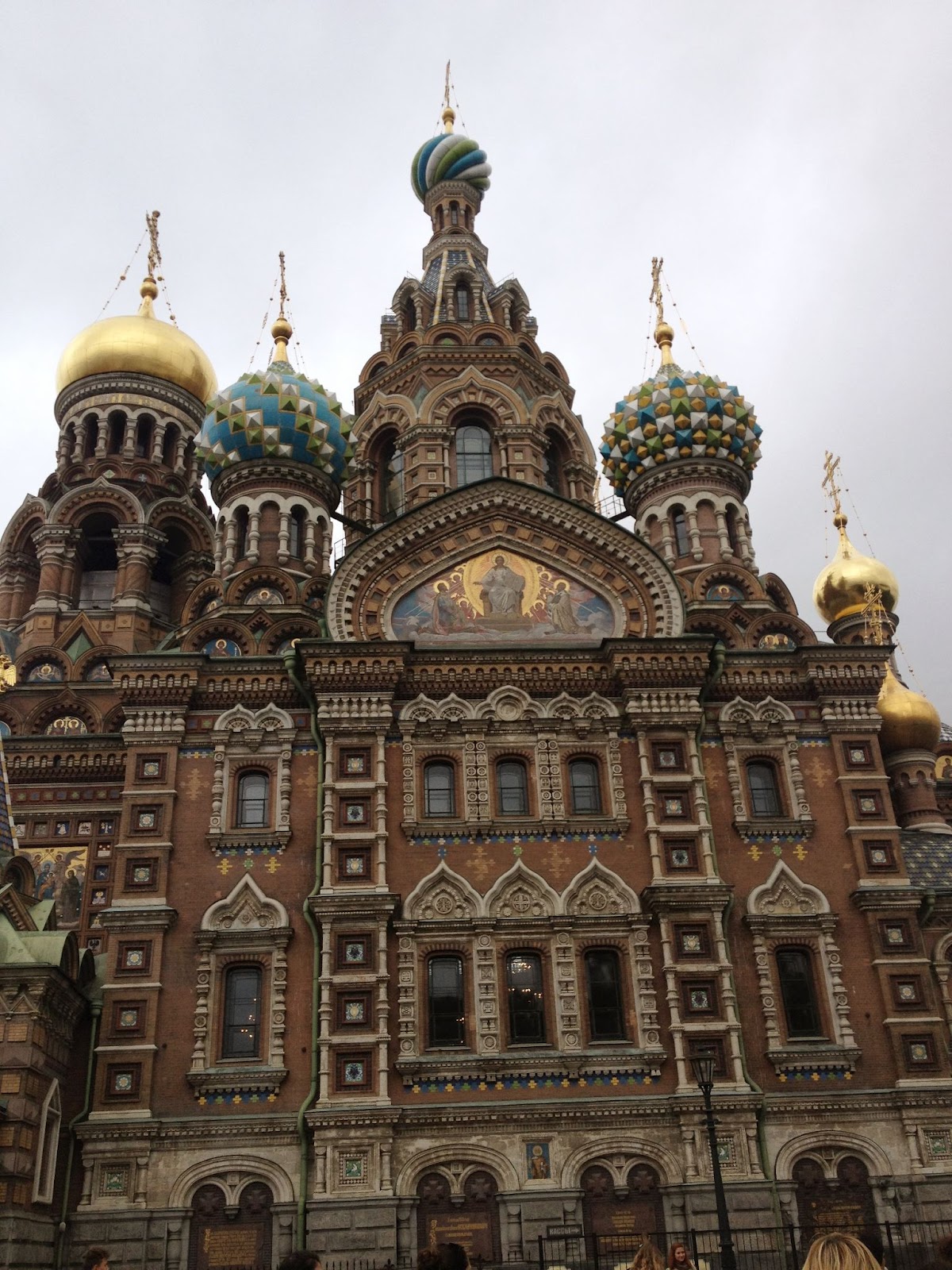
St. SaviorThis is the interior of the Church of the Savior on the Spilled Blood in St. Petersburg.  We got there as a service was going on in a side chapel: incense burning, heavenly chant by the choir, priest arrayed in vestments of finest gold, people gathered, standing, silently bowing and crossing themselves and lighting candles as the service went on.  Of course the church in Russia was nearly dead during the Soviet years: 1,000 churches in St. Petersburg at the time of the czars had been reduced to about 5 or 6 still open by 1990.  Other church buildings were demolished, or turned into warehouses, military training facilities, or even (in one case) an indoor swimming pool.  Now, the church is coming back to life.  Five hundred churches are now open in the city, and in each one we entered (on weekdays), there were worshipers gathered for the Divine Liturgy in progress.  Christ is risen, indeed.


Which brings me to wonder why we are so concerned about the future of our church.  Amidst great anxiety about declining numbers and tight finances, The Episcopal Church gathered in General Convention this summer.  It was my second Convention, and after my first, in 2009, I wasn’t sure I would return.  The anxiety, conflict, and stuck-ness seemed hopeless.  We made some good decisions, but seemed unable to address the vital issue of how to reverse, or event confront, the church’s decline.

This year was different.  Not only did we address the issues before us, we did it with excitement and a sense of positive vision and hope for the future.  We created Enterprise Zones to encourage evangelism with new populations.  We agreed to move our church headquarters away from 815 Second Avenue.  We created a Task Force for Restructuring the Church.

Like many people, I hope that “restructuring” is about more than, well, restructuring.  I hope this is not just another organizational quick-fix that changes a few lines of authority and re-draws our church’s flow chart.  I hope that instead, this “restructuring” becomes a reawakening.  I hope that we pray together, discuss together, gain insights from people not otherwise heard, and learn from each other.  I hope we follow the guidance of the Holy Spirit.  I hope this becomes a new beginning for our church, the start of an explosion of new energy, new ideas, and new people.

In the meantime, I have been elected, along with 37 other people, to serve on Executive Council, our church’s Board of Directors.  Members of Executive Council recently received a request to write a one-page introduction and name what we see as the three top priorities for us to address this triennium.  We also were invited to ask any questions we have about how Executive Council works.

The biggest question I have about how Executive Council works is, how should we interact with the Task Force on Restructuring?  (By the way, if you haven’t yet applied to serve on the Task Force, the deadline is Thursday, Aug. 23, and the application is here.)  Even though the Task Force is given the challenge of addressing big-picture restructuring issues, without being subordinate to Executive Council or other current leadership structures, I hope that there will be good communication between the two groups.  And I think there are certain tasks which are vital for Executive Council to address right away – tasks that are either inherently part of Council’s job, or were given to Council by General Convention.

Here are the priorities I came up with.  Of course these reflect my personal interests and biases.  And since I’m new to Executive Council, and we’re all new to this era of restructuring, I may have missed something important.

  • Find ways to support creative evangelism and church growth at the local level, such as Mission Enterprise Zones, with special priority given to emerging populations, youth and young adults, and non-English-speaking populations.
  • Move the corporate headquarters away from 815 2nd Ave., find a new headquarters location, and address the related question of how to responsibly leverage 815 as a real estate asset, whether by sale, lease, or other means.
  • Revamp Executive Council’s budgeting and financial oversight process and engage in a top-to-bottom review of Church Center costs, including a personnel review.  I support aligning the budget with the Marks of Mission.  Budgeting should be an ongoing process, with wide input, that continually tracks how our financial expenditures are supporting our stated mission priorities.  It should be led by Executive Council, with significant ongoing input from staff, with careful monitoring to ensure that information released to the public actually matches decisions made.
Those are my thoughts and priorities for Executive Council.  What are yours?  I’d be interested to hear them in the comments.
St-1. Savior ExteriorThese are important issues to discuss.  But – I want to be clear.  The most vital thing for us to discover is, how is the Holy Spirit leading us into a new era?  Difficult times have beset the church from the very beginning, and the Holy Spirit has always led us into new possibilities we never would have imagined on our own.  Read Acts Chapter 8 if you have any doubts about this.  (And check out the Acts 8 Moment’s website too.)  Or, if you still doubt that a declining church can be reawakened, maybe this photo will inspire you, the exterior of the Church of the Savior on the Spilled Blood in St. Petersburg.  The refurbishing is almost complete.  The smell of incense fills the air.  The sound of heavenly chanting fills the hearts of the worshipers who gather to pray and hope and share the Eucharist together.
Christ is risen, indeed.  Alleluia.