Unknown's avatar

About snooksusan

An Episcopal priest and church planter in Scottsdale, Arizona.

A New Pope

The National Catholic Reporter provides a most interesting profile of the new pope … Francis, the first Latin American Jesuit pope.  He is a man of contradictions: a conservative on sexual and gender equality matters, as expected (no one less conservative could have been elected by the conclave of cardinals, almost all of whom were appointed by Benedict XVI and John Paul II).  But he is a champion of the poor who lives simply, rides the bus, and kisses and washes the feet of AIDS patients.  And what to make of the rumors surrounding his involvement with the Argentine military junta of the 1970s?

Read the profile here.

Sermon for 3.10.13

Tony Campolo is a famous evangelical preacher, one I admire greatly. His most famous story is this.  He flew from east coast to Honolulu, and when you fly that far west, you wake up really early, and can’t get back to sleep.  So he woke up at 3:00 in the morning.  He was hungry, so he went out looking for a restaurant that was open at that time of night, and finally found a greasy spoon diner.  He went in, sat on a stool at the counter, and the owner, a big man wearing a dirty apron, handed him a plastic menu with grease stains on it.  He didn’t want to touch it, so he said, “Could I just have coffee and a doughnut?”

The owner wiped his hand on his dirty apron, reached out and picked up a doughnut, and slapped it on a plate in front of Tony.  So Tony was sitting there with his dirty doughnut, when the door opened and 7 or 8 prostitutes walked in, sat on stools at the counter on either side of him, so he said he sat there and made self small.

As he sat there, the prostitute to his right said to her friend, “Hey, I just remembered, tomorrow is my birthday, I’ll be 39.”

Her friend said, “What do you want me to do about it? You think you’re special?  You want me to throw you a party or something?”

The first woman said, “I don’t want you to do anything, what do you have to be so mean for, I’ve never had a birthday party in my life.  I’m just saying, tomorrow is my birthday.”

The women sat there a while longer and then all left, and Tony said to the owner, Harry, “You know that woman sitting next to me?”

Harry said, “You mean Agnes? Let me tell you about Agnes.  Agnes may be a prostitute, but she is one of the good people in this world.  She has a heart of gold.”

“Yes,” said Tony, “I have an idea, what if I come tomorrow and decorate the place for her birthday, and buy her a cake, and we can surprise her?”

Harry said, “That’s a great idea, and I’ll make the cake!”

The next night, Tony came in about 3, had streamers and ribbons and signs that said  Happy Birthday Agnes!  He had everyone cued up so about 3:30 when Agnes and her friends walked in, everyone shouted Happy Birthday!

Agnes looked like she’d been hit by lightning.  She stopped dead in the doorway, and everyone started singing Happy Birthday.  Harry guided her over to a table, made her sit down, brought the lit-up birthday cake out, set it in front of her.  She just sat there with tears pouring down her cheeks, till Harry said, “Come on Agnes, you’ve got to blow out the candles.”  But she couldn’t, so Harry did it for her.

Then Harry handed her a knife and said, “Cut the cake now, Agnes!”

She sat there with tears on her face, and finally she said, “Just a minute, can I just carry it next door to show my mother and I’ll be right back?”

She walked out the door, holding the cake like it was made of gold, and everyone in the place stood there in silence.  So Tony said, “Tell you what, let’s say a prayer for Agnes.  He prayed for her to have a happy birthday, for her to recover from all the things men had done to her, for this year to be a new beginning for her,  and then he opened his eyes and found Harry staring at him.

Harry said, “You lied to me!  You said you were a sociologist, but you’re a preacher!”

Tony said, “Well, I’m a sociologist AND a preacher.”

Harry said, “What kind of church you belong to?”

Tony said, ”I belong to the kind of church that throws birthday parties for prostitutes at 3:00 in the morning.”

Harry said, “No way, there ain’t no church like that.  If there was a church like that I would belong to it.”

Well, it might be hard for us to understand or to accept, but Jesus started the kind of church that throws birthday parties for prostitutes at 3:00 in the morning.  He was famous for hanging out with prostitutes, sinners, and tax collectors, and when he got criticized for it, he said, “People who are well don’t need a doctor – people who are sick do.”  And he tells today’s parable of the Prodigal Son in answer to the scribes and Pharisees who complain, “this fellow welcomes sinners and eats with them.”

Associating with those kind of people brings shame on him, yet Jesus doesn’t flinch, doesn’t shy away from the shame of these sinners.  Instead, he tells a very interesting story – the most famous of all his parables.

The risk is that it can become too familiar: we hear “There was a man who had two sons,” and we know what is coming, we are accustomed to the idea that no matter what we do, God will forgive us and welcome us home.

And what comfort that can bring us – what assurance of God’s love.  God is like a loving parent who watches us run away with all the gifts we have ever been given, watches us misuse and squander those gifts, waits, watching the road and praying for us to come home, and comes out running to greet us before we can even get out our speech of repentance.

God is the one who doesn’t even look very closely to see if we’ve actually repented.  We can listen to this parable and say, did this boy really repent of his sins? Or did he simply act in self-interest and return home where at least he could get a decent meal?

We can ask those things, but this parable tells us God doesn’t care – the gift of welcome from God, our loving parent, comes even before we can choke out our trumped-up speech begging forgiveness, asking to eat the scraps from his table like any servant – but God refuses to treat us as servants, God insists that we are God’s beloved children.

That’s a lot of love from a parent whose heart we have broken.  No wonder we love this story – no wonder it brings us comfort.

Yet we sometimes forget about the other part of the story – the older brother who is just as alienated as his younger brother, who refuses to forgive, refuses to welcome his brother home, who at the end of the story is standing outside the party, refusing to come inside and celebrate.  Does he ever come in?  We’re left hanging, waiting for his decision.  We have to decide how it ends for ourselves.

A God who throws birthday parties for prostitutes at 3:00 in the morning?  A parent who welcomes home the prodigal son who has thrown away his inheritance, lived with the pigs, and hit bottom?  The older brother isn’t sure he wants anything to do with a parent like that.  Do we?

The thing is, this parable is the perfect story for thinking about ourselves in Lent.  Lent is the season of repentance, of cleansing, of preparation for the Easter feast.  Lent is the time when we get ready for a surprise so unexpected, a gift so glorious, that no human being can ever deserve it.

As Paul says, in Christ God was reconciling the world to himself, not counting our trespasses against us – but opening up God’s eternal home to us.  We are the Prodigals God is welcoming home, yet we are also the older brothers who stand outside and scowl, wondering if we should go into the party, trying to decide how this story should end.  Both brothers stand in need of repentance and reconciliation, both brothers need to be welcomed by their father.

And when I read this parable, I am reminded of the words of our Confession.  We confess that we have sinned against God by thought, word and deed, by what we have done, and by what we have left undone.  Yes, the Prodigal Son has done many things of which he must repent, while the older brother has scrupulously kept the rules all his life.  But both sons have left things undone – they have not loved their father with their whole heart, they have not loved their neighbors as themselves.

Lent is a time to repent, not so much of the things we have done, but of the things we have left undone – we have failed to love God with our whole hearts, we have failed to love others as we love ourselves.

And yet it turns out that Christianity is not a religion of sorrow and repentance though – so much as it is a religion of welcome, reconciliation, celebration.  Every single one of us could repent a thousand times over of our failure to love God with our whole heart, and love our neighbors as ourselves.  Our human nature leads us to love ourselves more than we love others, to act in our own self-interest, to refuse to welcome others into our embrace.

Yet the gift of God – the gift of reconciliation that God offers us – is the gift not only of complete acceptance, of open invitation, of a welcome so exuberant that God would run down the street and fling the divine arms around us at even the thought that we might return home.

It is not only that incredible gift of love, but more still.  It is the gift of letting that love come to life in us.  As we open our hearts to God, as we allow God’s love to welcome us, that love begins to take root in our hearts and grow.  We can’t love others enough under our own power, but God can love them through us.  And God’s hope for us is that not only will we accept the love God gives us, but that we will begin to learn to give it away to others, letting God’s love shine in us and through us, pouring out of us into all the people around us.

We cannot love others as we love ourselves – but God can.  And God can love them through us.

A few years ago there was a story in the news.  Julio Diaz was on his way home from his work in NYC to his home in the Bronx.  He got off the subway and a teenager put a knife against his ribs and demanded all his money.  Diaz gave him his wallet, then as the teenager turned to go, something in him made him say, “Hey, aren’t you cold, don’t you want my jacket too?”

The kid turned and looked at him in shock, and Diaz said, “Well, if you’re desperate enough to need my money, maybe you’re hungry too – want to come have dinner?”

Together, they went to the diner where Diaz ate every night, the owner and all the employees stopped by the table to talk.  The kid asked if Diaz owned the place, and he said, “No, but I come here a lot.”

The kid said, “But they all treat you like a celebrity.”

Diaz said, “That’s because I treat them nice, didn’t anyone ever tell you that that’s what you were supposed to do?”

The kid said, “Yes, but I didn’t think anyone really did it.”

They finished their meal, and Diaz said, “Well, I don’t have any money, so it looks like you’re going to have to buy dinner.  Unless you want to give me back my wallet, then I’ll be happy to buy your dinner.”

The kid turned it over.  Diaz paid for dinner and then gave the kid $20,  but he said he wanted something in exchange – he wanted the kid’s knife. The teenager reached into his pocket, took it out and handed it over.

Julio Diaz was a man who understood how to let God’s love live in him.  He understood the nature of forgiveness, he knew how to look at a person as a beloved child of God.

We are all called to be that person of love.  That doesn’t mean we allow ourselves to be victims, but it means that we always watch for the chance to love when we can – in our personal lives, in our work lives, in our communities.

God gives us the gift of love, and it is one gift that grows as we give it away.  Because love comes to us free, from the author of love, the one who always welcomes us home, and throws a party when we arrive, and tells us not to stand out in the cold, but come on in and celebrate.

Sermons by Susan Snook prior to 2013 can be found on her old sermon blog, here.

Strategic Discernment, Not Strategic Planning

I have participated in four separate strategic planning processes in various churches.  They each followed a different methodology, and each had similar results:
  • A group of dedicated people got together and worked very hard over several long meetings to create a plan.
  • A facilitator led us through a well-organized set of exercises to encourage everyone to contribute her or his ideas for the future.
  • With the facilitator’s help, we took a world of information and reshaped it into a set of goals and priorities, with timelines and responsibility assignments.
  • A beautifully packaged plan was created, summarized, presented, and affirmed by vestry vote.
  • In each case, we looked at the final product and felt in some unidentifiable way that something vital was missing.
  • The plan went onto the shelf and, after some initial attempts to follow up on identified action steps, was never seen again.

I know that the “shelf” is a common destination point for strategic plans in all kinds of organizations, not just the church.  But after the last time I experienced this life-draining process, I started thinking: maybe the church, of all places, is not the place to be doing strategic planning.

This is not to say that the church should just drift along and let happen whatever may.  That’s how we fall into bad habits and start believing that the church exists for the benefit of its members, and everyone who should be a member already is a member.  Our natural human tendency is to serve ourselves before we serve others; it takes vision and planning to remember that we have a broader mission to accomplish.
But the church is uniquely a Spirit-led organization, or should be.  And the Spirit is full of surprises we can’t anticipate or plan for.  It would be difficult to imagine the apostles in Acts 7 sitting down for a strategic planning session and determining that the next logical step would be to go out to the Gaza Road and wait for an Ethiopian eunuch to come along.  Who would ever think to do that?  Who would imagine that that young man holding the coats while Stephen was stoned in Acts 7 would turn into the greatest evangelist in world history in Acts 9?  Who would have suggested that Peter go to sleep and arrange for a dream involving unclean animals on a sheet descending from heaven in Acts 10?
In my church experience, most of the great steps forward I have seen weren’t planned.  They happened: the right person came along, the right location became available, someone heard a call from God they couldn’t ignore.  Yes, we channeled those outpourings of the Spirit in organized and planned directions, but they came to us as gifts from God.
This is why, as the church plant I lead is entering into a vitally important new phase (a move to our first permanent building), we are not doing strategic planning.  We are doing strategic discernment.  Where is God leading us? is the question we are asking.  We are not asking for a list of ideas, or a list of problems to solve, or a list of good stories that highlight the strengths we want to build on.  We are praying and discerning.
The process that we have designed starts with an extended period of meditative prayer (as opposed to what I have often experienced before – a perfunctory one-paragraph petition for God’s guidance before we get down to the real business of the meeting).  It continues with an extended “African” Bible study of Luke 10:1-12 (one of the classic passages on evangelism).  It then proceeds with some creative exercises to encourage people to use right-brain powers to envision God’s plan for the future.  Only after all those exercises do we start working on goals, priorities, and problems.
In other words, this process is our attempt to let our own thoughts and plans take a step back, and ask God to open our minds to God’s thoughts and plans.  It is a process of strategic discernment, not strategic planning.
Here are the details of how we have done this process:
1.  Open the team meeting with prayer.  This is not a prayer where you read words while everyone bows their head, then move on to the real business of the meeting.  This is prayer for discernment.  Tell the group that you are going to take some time for silence.  Ask them to make themselves comfortable, flatten feet on the floor, close eyes, etc.  If they wish to sit or lie on the floor, that’s fine.  Take a few minutes to help them silence themselves.  Ask them to breathe deeply and lead them through a relaxation exercise, head to toes.  Then, after some silence, invite the Holy Spirit to speak into our hearts, saying something like, “Holy Spirit, we are gathered in your presence today to hear your words … Please speak your words into our hearts … Help us to hear what you want to say … Help us to see your vision for each one of us, and for your church.”  Pause for more silence, then invite people when they are ready to open their eyes and join the group.
2.  Continue with team Bible study of Luke 10:1-12.
  • Ask someone to read the passage through once out loud.  Tell the group to pay attention as the passage is read and think about:what word or phrase caught your attention in this passage, or what would you like to ask a Bible scholar more about the meaning of?
  • Ask the full group to divide up into small groups of three.  Take 5-10 minutes and ask the small groups to share their answer to the first question.
  • Bring the full group back together and ask for sample responses to the question (not a formal reporting process, just sample responses from a number of people).  Similar insights and questions will probably begin to emerge.  Record them on a flipchart.
  • Have someone read the passage through a second time.  Tell them to pay attention to the following question: what does this passage mean for my/our ministry at Nativity during the next ten years?
  • Divide them into the small groups of three again and give them 10-15 minutes to share in response.
  • Bring the full group together and ask for sample responses. Record the responses on a flipchart.
  • Have someone read the passage through aloud a third time.  Tell them that the question to ask this time is: what is God calling us to do in our group’s ministry at Nativity during the next year?
  • Divide them into small groups and have them share for 10-15 minutes.
  • Bring the full group together and record responses.  Pay attention to patterns that emerge.
  • Put the flipchart pages on the walls around the room so everyone can see them.

3.  Hand out paper and crayons, and ask each person to draw a picture or symbol that gives an image of the insights they got from the Bible study, something that would represent what they believe God is calling your group’s ministry at Nativity to become.  Give them 5 minutes to complete this exercise.

4.  Go around the room and ask each person to share their picture and describe what it represents.  On a flipchart, record insights or different components of what people are seeing.

5.  Together, begin to describe what God is calling your group’s ministry to look like ten years from now.  What happens in the ministry?  Who is involved?  What kind of spiritual growth and discipleship is happening in the ministry?  What kind of people are leading it and participating in it? How is this ministry reaching out to new people who are not yet a part of the church?  How is it building ones who have been around longer into better disciples?  How is it transforming lives?

6.  Together, create a short news story that describes your group’s ministry as it exists ten years from now.  What is it doing, how are people growing, what would a religious news reporter see as exciting in the group?  (You may choose to create small groups of three and have each group appoint a “reporter” who will interview the others and write a short news story.)

7.  Now, looking at your group’s news story/stories, start thinking about what first steps we should take over the next year to get to that ten-year vision.

  • What kind of resources do you need – personnel, money, time?
  • What work needs to be done to make that vision a reality?
  • What contribution will this ministry make to the full Nativity family?
  • How will this ministry transform lives with the love of Jesus Christ?
  • What are your group’s top three priorities for the coming year?

8.  From there, each group reports to the vestry, and the vestry identifies over-arching themes, agrees on its top three or four priorities for the coming year, decides how to allocate resources to those priorities, communicates the priorities to the ministry groups, and asks each ministry group to be in charge of implementation and accountability.

I am not saying that this process is the best possible way to do visioning in the church.  But we have had good results so far.  The group leaders (who are ministry leaders working with their ministry groups) report terrific, Spirit-filled visioning sessions.  The groups have come up with amazingly coherent plans that, without much effort on the part of the vestry, naturally highlight three or four clear, over-arching priorities.  Every group has, in one way or another, identified evangelism and discipleship growth as a clear strategic priority.
How have you done strategic discernment in your congregation?
Blog posts by Susan Snook prior to March 2013 can be found on her old blog, here.

Restructuring and Reawakening

I’ve been fairly silent since returning home from General Convention – partly because I came home, did my laundry, and headed out the next day on my family vacation.  We made it as far as St. Petersburg, Russia, this year – here’s a photo for you:
St. SaviorThis is the interior of the Church of the Savior on the Spilled Blood in St. Petersburg.  We got there as a service was going on in a side chapel: incense burning, heavenly chant by the choir, priest arrayed in vestments of finest gold, people gathered, standing, silently bowing and crossing themselves and lighting candles as the service went on.  Of course the church in Russia was nearly dead during the Soviet years: 1,000 churches in St. Petersburg at the time of the czars had been reduced to about 5 or 6 still open by 1990.  Other church buildings were demolished, or turned into warehouses, military training facilities, or even (in one case) an indoor swimming pool.  Now, the church is coming back to life.  Five hundred churches are now open in the city, and in each one we entered (on weekdays), there were worshipers gathered for the Divine Liturgy in progress.  Christ is risen, indeed.


Which brings me to wonder why we are so concerned about the future of our church.  Amidst great anxiety about declining numbers and tight finances, The Episcopal Church gathered in General Convention this summer.  It was my second Convention, and after my first, in 2009, I wasn’t sure I would return.  The anxiety, conflict, and stuck-ness seemed hopeless.  We made some good decisions, but seemed unable to address the vital issue of how to reverse, or event confront, the church’s decline.

This year was different.  Not only did we address the issues before us, we did it with excitement and a sense of positive vision and hope for the future.  We created Enterprise Zones to encourage evangelism with new populations.  We agreed to move our church headquarters away from 815 Second Avenue.  We created a Task Force for Restructuring the Church.

Like many people, I hope that “restructuring” is about more than, well, restructuring.  I hope this is not just another organizational quick-fix that changes a few lines of authority and re-draws our church’s flow chart.  I hope that instead, this “restructuring” becomes a reawakening.  I hope that we pray together, discuss together, gain insights from people not otherwise heard, and learn from each other.  I hope we follow the guidance of the Holy Spirit.  I hope this becomes a new beginning for our church, the start of an explosion of new energy, new ideas, and new people.

In the meantime, I have been elected, along with 37 other people, to serve on Executive Council, our church’s Board of Directors.  Members of Executive Council recently received a request to write a one-page introduction and name what we see as the three top priorities for us to address this triennium.  We also were invited to ask any questions we have about how Executive Council works.

The biggest question I have about how Executive Council works is, how should we interact with the Task Force on Restructuring?  (By the way, if you haven’t yet applied to serve on the Task Force, the deadline is Thursday, Aug. 23, and the application is here.)  Even though the Task Force is given the challenge of addressing big-picture restructuring issues, without being subordinate to Executive Council or other current leadership structures, I hope that there will be good communication between the two groups.  And I think there are certain tasks which are vital for Executive Council to address right away – tasks that are either inherently part of Council’s job, or were given to Council by General Convention.

Here are the priorities I came up with.  Of course these reflect my personal interests and biases.  And since I’m new to Executive Council, and we’re all new to this era of restructuring, I may have missed something important.

  • Find ways to support creative evangelism and church growth at the local level, such as Mission Enterprise Zones, with special priority given to emerging populations, youth and young adults, and non-English-speaking populations.
  • Move the corporate headquarters away from 815 2nd Ave., find a new headquarters location, and address the related question of how to responsibly leverage 815 as a real estate asset, whether by sale, lease, or other means.
  • Revamp Executive Council’s budgeting and financial oversight process and engage in a top-to-bottom review of Church Center costs, including a personnel review.  I support aligning the budget with the Marks of Mission.  Budgeting should be an ongoing process, with wide input, that continually tracks how our financial expenditures are supporting our stated mission priorities.  It should be led by Executive Council, with significant ongoing input from staff, with careful monitoring to ensure that information released to the public actually matches decisions made.
Those are my thoughts and priorities for Executive Council.  What are yours?  I’d be interested to hear them in the comments.
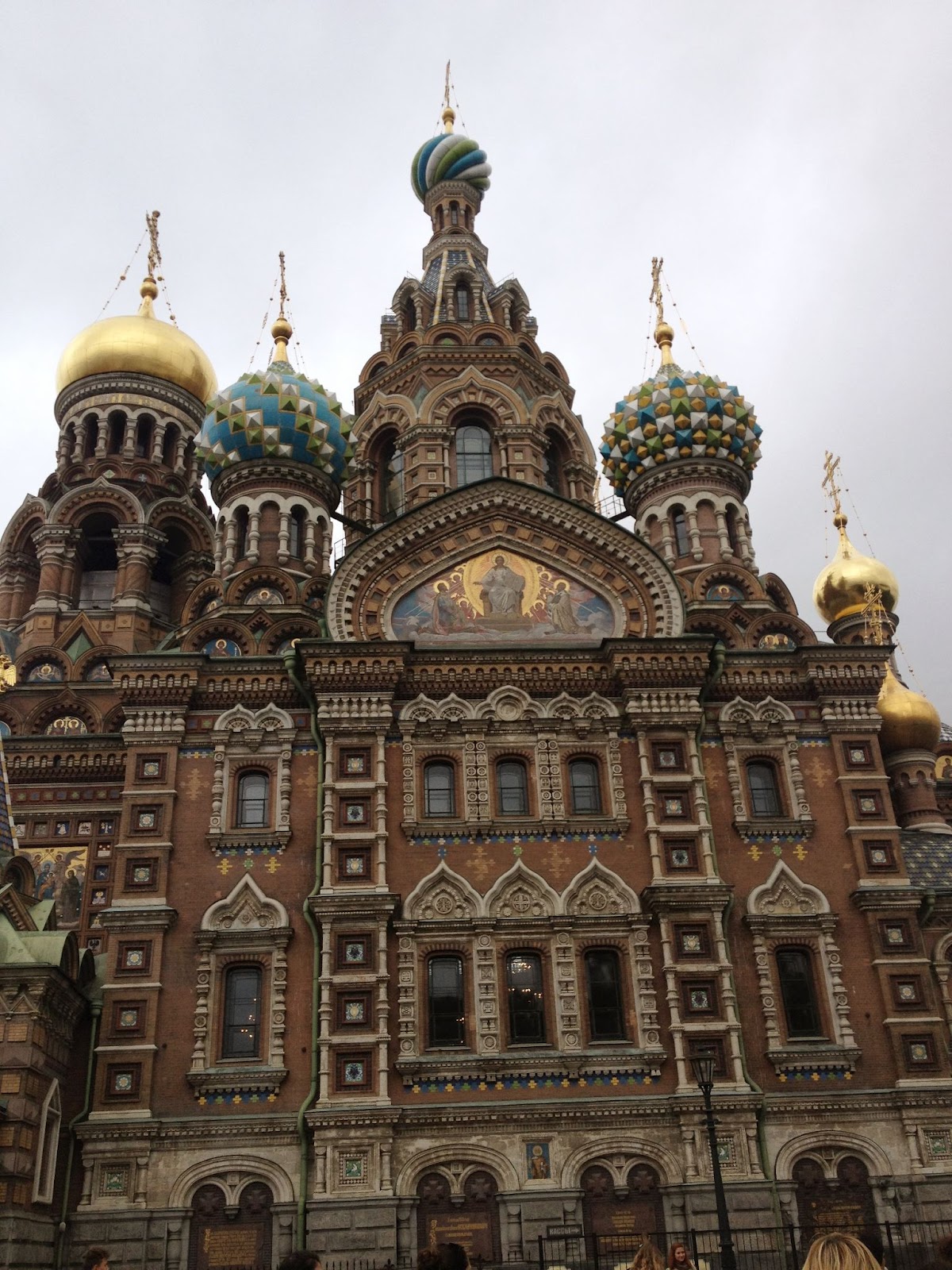
St-1. Savior ExteriorThese are important issues to discuss.  But – I want to be clear.  The most vital thing for us to discover is, how is the Holy Spirit leading us into a new era?  Difficult times have beset the church from the very beginning, and the Holy Spirit has always led us into new possibilities we never would have imagined on our own.  Read Acts Chapter 8 if you have any doubts about this.  (And check out the Acts 8 Moment’s website too.)  Or, if you still doubt that a declining church can be reawakened, maybe this photo will inspire you, the exterior of the Church of the Savior on the Spilled Blood in St. Petersburg.  The refurbishing is almost complete.  The smell of incense fills the air.  The sound of heavenly chanting fills the hearts of the worshipers who gather to pray and hope and share the Eucharist together.
Christ is risen, indeed.  Alleluia.